Temporary dental restorations are used as protective placeholders while you wait for permanent crowns or fillings. These short-term solutions protect your tooth from pain, infection, and further damage during the treatment process.
When you’re traveling with temporary restorations, especially on your way back home after dental work abroad or in another city, you need to be extra careful to keep them safe.
Caring for temporary restorations while traveling back home requires heightened awareness because these restorations are naturally more delicate than permanent ones. You’re working with materials meant for temporary use—acrylic plastics, softer dental cements, and lightweight metals that can’t handle the same forces as permanent restorations.
Traveling presents unique challenges to maintaining your dental care routine on the go. Changes in air pressure during flights, limited access to proper oral hygiene facilities, unfamiliar foods, and the stress of travel itself can all put your temporary restoration at risk. There may be times when immediate dental care isn’t easily accessible, making it crucial to take preventive measures during your trip.
Understanding Temporary Dental Restorations
Temporary dental restorations come in two primary types: temporary crowns and temporary fillings. Each serves a specific protective function while you wait for your permanent restoration to be fabricated and placed.
Temporary Crowns
Temporary crowns typically cover the entire visible portion of a prepared tooth, protecting it after procedures like root canals or when a permanent crown is being made.
Temporary Fillings
Temporary fillings seal cavities or openings in teeth after decay removal or during multi-stage treatments.
Materials Used for Temporary Crowns and Fillings
The materials for temporary crowns and fillings vary based on their intended use and location in your mouth:
- Acrylic-based plastic: The most common material for temporary crowns, offering reasonable strength and aesthetics
- Metal crowns: Sometimes used for temporary coverage, particularly on back teeth where strength matters more than appearance
- Zinc oxide eugenol: A softer cement frequently used for temporary fillings, known for its soothing properties
- Glass ionomer cement: Another filling material that releases fluoride and bonds chemically to tooth structure
Lifespan of Temporary Restorations
The lifespan of temporary restorations ranges from several days to three months, depending on multiple factors. The material composition plays a significant role—acrylic and metal restorations generally last longer than cement-based fillings. Location matters too: restorations on back teeth endure more chewing force than those on front teeth. Your daily habits, including what you eat and how you maintain oral hygiene, directly impact how long your temporary restoration remains intact and functional.
Challenges of Traveling with Temporary Restorations
The Fragility of Temporary Restorations
Temporary restorations are designed to be short-term solutions, which makes them more fragile than permanent ones. Unlike permanent restorations that use strong adhesives and durable materials like porcelain or gold alloys to bond securely to your tooth structure, temporary versions rely on weaker cements. These cements allow for easy removal during your next dental appointment but also make the temporary crown or filling more susceptible to dislodgement.
Travel-Related Risks to Dental Work
When you’re away from your regular dental care, the risks to your dental work increase significantly. Here are some potential travel-related risks you should be aware of:
- Air pressure changes during flights can intensify sensitivity in teeth with temporary restorations.
- The stress of carrying luggage, rushing through airports, or managing travel anxiety may lead you to unconsciously clench or grind your teeth—actions that put excessive pressure on already vulnerable restorations.
- Changes in your eating routine during travel often mean grabbing whatever food is convenient, which might include items you’d normally avoid with a temporary restoration.
Common Issues During Travel
While traveling, you may encounter certain issues that can affect your temporary dental work. These common problems include:
- Dislodgement from eating unfamiliar or harder-than-expected foods
- Damage from temperature extremes in airline meals or local cuisine
- Increased sensitivity due to irregular eating schedules
- Difficulty maintaining your normal oral hygiene routine in transit
The Importance of Preventive Care
Preventive care becomes crucial when traveling with temporary dental work. Since you’re away from your regular dentist, it’s essential to take proactive measures to protect your restorations. Here are some preventive steps you can take:
- Be mindful of what you eat: Avoid hard or chewy foods that could potentially dislodge your temporary restoration.
- Maintain good oral hygiene: Brush and floss regularly, even when you’re on the go. Carry travel-sized toothbrush and toothpaste with you for convenience.
- Monitor any changes: Pay attention to how your restoration feels and any signs of discomfort or sensitivity. If you notice anything unusual, contact your dentist as soon as possible.
Remember, prevention is far more valuable than attempting emergency fixes in unfamiliar locations. By being vigilant about your dental care while traveling, you can minimize the risks associated with temporary restorations and ensure their longevity until you can receive permanent treatment.
Essential Care Tips for Temporary Restorations While Traveling Back Home
Caring for temporary restorations while traveling back home requires a strategic approach to eating, cleaning, and maintaining your oral health. You need to adjust your daily habits to protect these fragile dental solutions during your journey.
Mindful Eating Practices
When caring for temporary crowns on the road, you should chew exclusively on the opposite side of your mouth from the restoration. This simple adjustment significantly reduces the risk of dislodging or damaging the temporary work. Your food choices matter just as much as how you chew them.
Foods to avoid with temporary restorations:
- Sticky items like caramel, taffy, gum, and dried fruits that can pull the restoration loose
- Hard foods such as nuts, ice, hard candies, and raw vegetables that can crack or break the material
- Chewy substances including bagels, tough meats, and gummy candies that create excessive pressure
- Very hot beverages or cold foods that cause expansion and contraction of the temporary material
Oral Hygiene with Temporary Fillings
You need to modify your brushing technique while traveling. Use a soft-bristled toothbrush and apply gentle pressure around the restoration area. Brush at a 45-degree angle to the gum line, using small circular motions rather than aggressive back-and-forth scrubbing.
Flossing requires extra attention when you have temporary dental work. Slide the floss in sideways rather than snapping it down between teeth. Once the floss reaches the gum line, pull it out horizontally through the side instead of lifting it up over the restoration. This sideways motion prevents accidentally catching and dislodging the temporary material.
Maintaining Cleanliness on the Go
Rinse your mouth with alcohol-free mouthwash or warm salt water after meals. You can prepare a salt water solution by mixing half a teaspoon of salt in eight ounces of warm water. This practice keeps the restoration area clean without the harsh chemicals that might weaken temporary dental cement.
Emergency Preparedness During Travel Back Home With Temporary Restorations
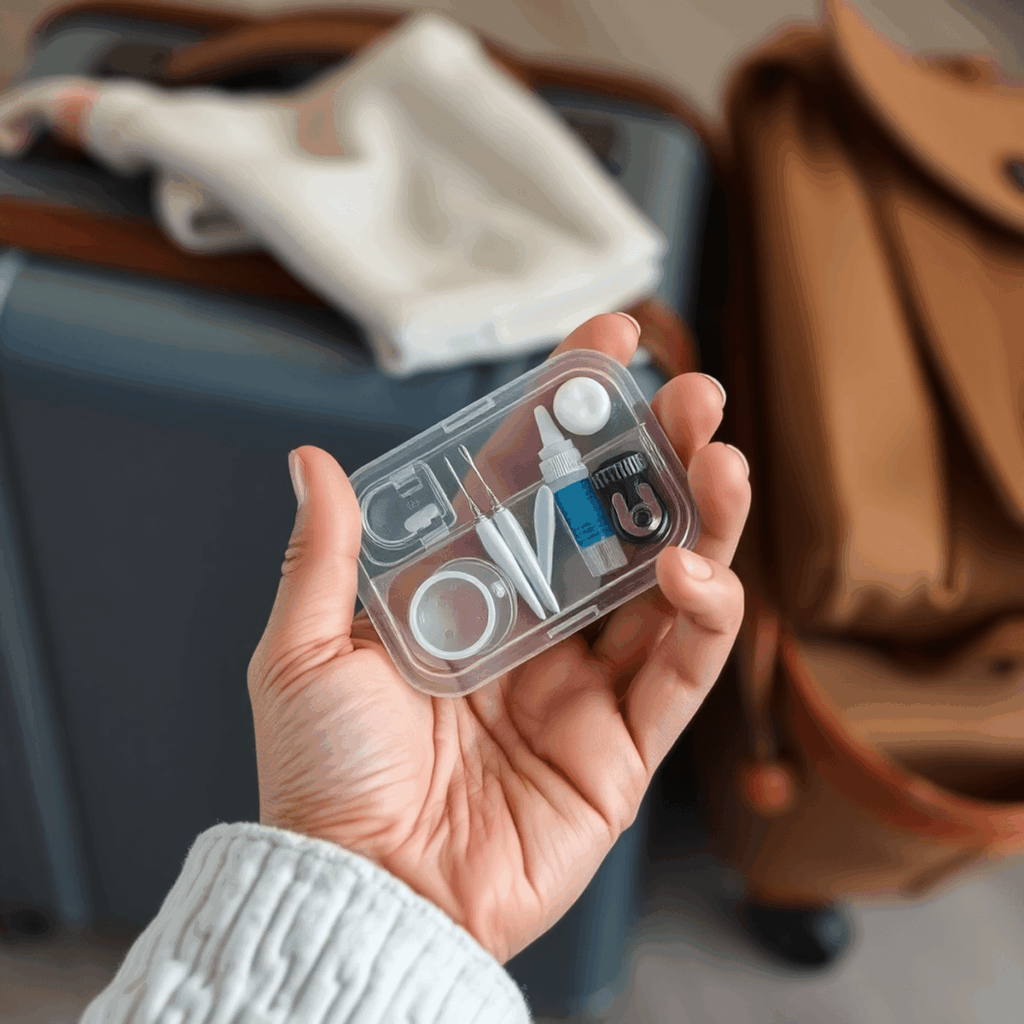
Packing an emergency dental kit for travelers with temporary restorations can make the difference between a minor inconvenience and a dental crisis. Your kit should include temporary dental cement (available at most pharmacies), dental wax, pain relievers, and the contact information of your dentist. These supplies give you the ability to manage unexpected issues until you can reach professional care.
If your temporary restoration becomes loose:
- Remove it carefully if it’s completely detached to prevent swallowing
- Clean both the restoration and your tooth gently with warm water
- Dry the restoration and tooth surface as much as possible
- Apply a small amount of temporary dental cement inside the restoration
- Place it back on the tooth and bite down gently to secure it
- Avoid eating on that side for at least an hour
You should contact a dentist as soon as possible, even if you’ve successfully reattached the restoration. The temporary cement you apply yourself is exactly that—temporary. It’s designed to hold the restoration in place for a short period, not to replace professional dental care.
Keep your emergency dental kit in your carry-on luggage rather than checked bags. You need immediate access to these supplies if problems arise during your journey. Store your dentist’s phone number in your phone and write it down as a backup.
Monitoring and Recognizing Warning Signs While Traveling Back Home With Temporary Restorations
Your ability to identify symptoms of failing temporary restoration while traveling back home can prevent serious dental complications. Pay close attention to your temporary restoration throughout your journey, as early detection of problems allows you to seek help before the situation worsens.
Physical Changes to Watch For:
- Looseness or movement when you touch the restoration with your tongue or finger
- Gaps forming between the restoration and your natural tooth structure
- Rough or sharp edges that weren’t present initially
- Visible cracks or pieces breaking off from the restoration
Sensory Warning Signs:
You may experience persistent discomfort or pain that doesn’t subside with over-the-counter pain relievers. This type of ongoing pain differs from the mild sensitivity that can be normal after dental work. Sensitivity changes deserve your attention—sudden sharp pain when consuming hot, cold, or sweet foods indicates the restoration may have shifted or developed a gap, exposing the underlying tooth structure.
When to Seek Immediate Dental Care:
Contact a dentist right away if you notice severe, throbbing pain that interferes with your daily activities, visible swelling around the affected tooth or gums, signs of infection such as fever or pus, or if the restoration falls out completely. These situations require professional intervention to protect your tooth from damage, decay, or infection that could compromise your permanent restoration later.
Planning Ahead: Dental Care Considerations Before Traveling Back Home With Temporary Restorations
A pre-travel dental checkup before traveling back home with a temporary restoration can prevent complications during your journey. Schedule an appointment with your dentist to assess the condition of your temporary restoration and address any concerns about its stability during travel. Your dentist can reinforce the restoration if needed and provide specific guidance based on your travel duration.
Caring for Temporary Restorations While Traveling Back Home requires strategic planning around your permanent restoration timeline. You need to arrange your permanent restoration appointment within the recommended 2–3 week timeframe after receiving your temporary one. If your travel plans extend beyond this window, discuss options with your dentist such as:
- Scheduling the permanent restoration before departure
- Identifying qualified dental professionals at your destination, like those at Dentof Istanbul
- Requesting referrals to trusted dentists in your home location
- Obtaining your dental records and treatment details for continuity of care
Research dental care availability at your destination or along your travel route. Save contact information for emergency dental clinics and understand their operating hours. You should also investigate whether your travel dental insurance coverage includes emergency dental services abroad or in different regions. Some policies require pre-authorization for dental work, so verify coverage details before departing. Keep your insurance card and policy information accessible throughout your trip.
Conclusion
Caring for temporary restorations while traveling back home requires your attention and commitment to proper oral care practices. These restorations serve as protective placeholders, not permanent solutions. You need to understand that the clock is ticking—temporary crowns and fillings demand professional follow-up within that critical 2–3 week window.
Your journey home doesn’t excuse neglecting your dental health. Maintaining temporary restorations during travel back home means staying vigilant about what you eat, how you clean your teeth, and recognizing warning signs before they escalate into emergencies. You’ve invested time and money into your dental treatment; protect that investment by following the care guidelines we’ve discussed.
Take ownership of your oral health during travel. Keep emergency supplies accessible, monitor your restoration daily, and don’t hesitate to seek professional help if something feels wrong. Your temporary restoration is doing its job—protecting your tooth structure and preventing complications. Now you need to do yours by ensuring you complete your treatment plan promptly after arriving home.