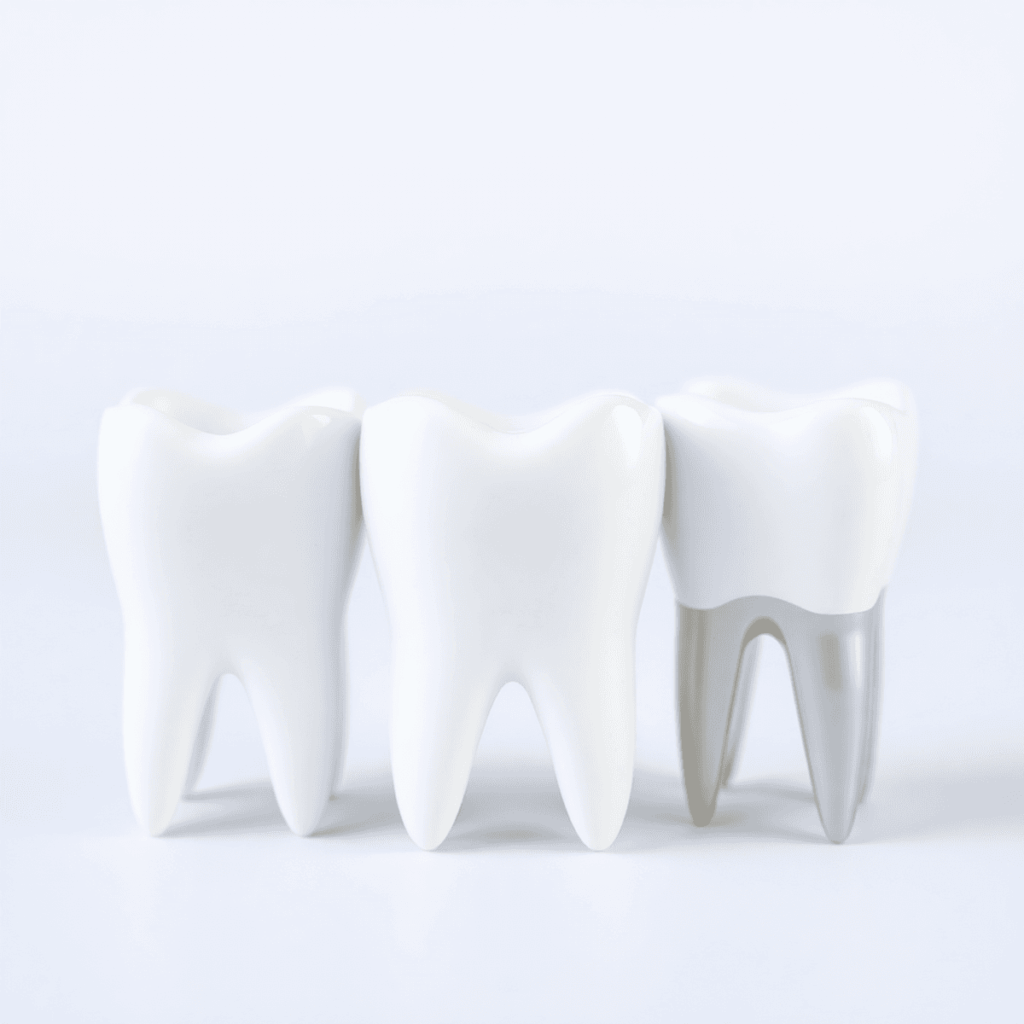
When you have damaged or decayed teeth, dental crowns are an effective way to restore their function and appearance. These cap-like restorations cover the entire tooth structure above the gum line, protecting what remains and providing a natural-looking smile. You can think of them as protective helmets for your teeth—they shield vulnerable tooth structure from further damage while allowing you to chew and speak normally.
The material you choose for your crown is more important than you might realize. Comparing crown materials: zirconia, E-Max, and metal-ceramic options isn’t just about picking the most visually appealing option. Your choice will impact the longevity of the crown, how comfortable it feels in your mouth, and its ability to withstand the specific forces of your bite. When making this decision, it’s crucial to consider factors such as your aesthetic goals, the location of the crown in your mouth, your budget, and any habits like teeth grinding.
Each type of crown—zirconia, E-Max, and metal-ceramic—has its own set of advantages. By understanding these differences, you’ll be better equipped to have an informed discussion with your dentist about which material is best suited for your individual needs.
Understanding Different Types of Dental Crown Materials
When you’re faced with the decision of which crown material to choose, you need to understand the distinct characteristics that set each option apart. The three primary dental crown types dominating modern restorative dentistry—zirconia, E-Max, and metal-ceramic—each bring unique advantages to the table.
1. Zirconia Crowns
Zirconia crowns utilize a translucent metallic oxide that delivers exceptional strength and durability. You’ll find these crowns particularly effective when covering heavily stained or discolored teeth while maintaining structural integrity under significant bite forces.
2. E-Max Crowns
E-Max crowns represent the pinnacle of aesthetic restoration through their lithium disilicate ceramic composition. This monolithic material mimics natural tooth enamel with remarkable translucency, making it nearly indistinguishable from your surrounding teeth.
3. Metal-Ceramic Crowns
Metal-ceramic crowns combine a robust metal substructure with a porcelain outer layer. This traditional approach has earned its reputation through decades of proven clinical success and reliable long-term performance.
The selection process for crown material properties depends on several critical factors:
- Aesthetic requirements: Anterior teeth demand superior translucency and color matching, while posterior teeth prioritize functional strength
- Bite force and grinding habits: Patients with bruxism or strong jaw muscles require materials that can withstand intense pressure without causing excessive wear on opposing teeth
- Budget constraints: Material costs vary significantly, with E-Max typically commanding premium pricing compared to zirconia and metal-ceramic alternatives
- Biocompatibility concerns: Patients with metal sensitivities need ceramic-only options that eliminate allergic reaction risks
- Tooth location: Front teeth benefit from highly aesthetic materials, while back molars need maximum durability for chewing forces
Your dentist evaluates these factors alongside your specific dental anatomy and lifestyle habits to recommend the most appropriate material for your restoration. For more information on different types of restorative crowns, you might want to explore resources available at Dentofistanbul.
1. Zirconia Crowns: Strength and Durability with a Natural Aesthetic Appeal
Understanding the Unique Properties of Zirconia Crowns
Zirconia crowns are crafted from a translucent metallic oxide—specifically zirconium dioxide—that delivers exceptional mechanical properties. This crystalline material undergoes a transformation toughening process, which means when stress is applied, the crystal structure changes to prevent crack propagation. You get a crown that can withstand significant bite forces, making zirconia one of the strongest dental materials available today.
The flexural strength of zirconia reaches approximately 900-1200 MPa, substantially higher than other ceramic options. This remarkable strength translates to thinner crown designs without compromising structural integrity. You can preserve more of your natural tooth structure during preparation, which benefits long-term tooth health.
The Biocompatibility Benefits of Zirconia Crowns
Zirconia crowns offer several biocompatibility benefits, making them an excellent choice for patients with metal sensitivities or allergies. Unlike metal-ceramic crowns that contain nickel, cobalt, or other potentially allergenic metals, zirconia is completely metal-free. The material is bioinert, meaning it doesn’t trigger immune responses or cause tissue inflammation. Your gums typically respond well to zirconia, with minimal plaque accumulation along the crown margins.
Zirconia’s white color eliminates the dark line sometimes visible at the gum line with metal-ceramic crowns. You won’t experience metallic taste or galvanic reactions that occasionally occur when different metals interact in your mouth.
Important Considerations Before Choosing Zirconia Crowns
While zirconia crowns have many advantages, there are some important considerations to keep in mind before choosing this option:
- Bruxism or Strong Bite: The exceptional hardness that makes zirconia durable can become problematic if you have bruxism (teeth grinding) or an especially strong bite. The material’s rigidity may transfer excessive forces to the underlying tooth structure or dental implant.
- Wear on Opposing Teeth: You might experience increased wear on opposing natural teeth, particularly if the zirconia surface isn’t properly polished. When your dentist polishes zirconia crowns to a smooth finish, the wear on opposing teeth decreases significantly.
- Discussion with Dentist: It’s important to discuss your grinding habits with your dentist. They may recommend using a night guard to protect both your zirconia crowns and natural teeth from excessive wear.
By considering these factors and discussing them with your dental professional, you can make an informed decision about whether zirconia crowns are the right choice for you.
2. E-Max Crowns: Aesthetic Excellence with Lithium Disilicate Ceramic
When comparing crown materials, E-Max crowns stand out for their exceptional aesthetic qualities. These restorations are crafted from lithium disilicate ceramic, a material that has transformed cosmetic dentistry by offering translucency and color characteristics that closely mimic natural tooth enamel.
The Monolithic Advantage
E-Max crowns are monolithic, meaning they’re made from a single, uniform block of lithium disilicate ceramic. This one-piece construction eliminates the layering process required in traditional crown fabrication. You won’t find a metal substructure hidden beneath a porcelain veneer. The monolithic nature provides several benefits:
- Consistent color throughout the restoration – no risk of metal showing through at the gum line
- Reduced thickness requirements – preserving more of your natural tooth structure
- Enhanced light transmission – creating a lifelike appearance that blends seamlessly with adjacent teeth
The translucency of lithium disilicate ceramic allows light to pass through the crown similarly to natural enamel, making E-Max crowns particularly ideal for anterior (front) teeth where aesthetics are paramount.
Superior Bonding and Structural Integrity
E-Max crowns bond exceptionally well to your natural tooth structure through adhesive cementation. This chemical bonding creates a strong union between the restoration and your tooth, providing both retention and reinforcement. The bonding process essentially makes the crown and tooth function as a single integrated unit, distributing stress more evenly during chewing and biting.
The material’s crystalline structure contributes to impressive flexural strength, typically ranging between 360-400 MPa. This strength level represents a significant improvement over older ceramic materials that were prone to fracturing under normal biting forces.
Weighing the Investment
Lithium disilicate ceramic crowns demonstrate improved resistance to chipping compared to their predecessors in the all-ceramic family. The material’s toughness and the absence of a layered structure reduce the likelihood of veneer fractures that plagued earlier ceramic systems.
The primary consideration you’ll face with E-Max is cost. These crowns tend to be more expensive than traditional metal or porcelain-fused-to-metal options due to the advanced materials and technology involved in their production.
While E-Max crowns may require a higher upfront investment, their long-term benefits—such as durability, aesthetics, and preservation of tooth structure—can make them a worthwhile choice for many patients seeking restorative solutions.
3. Metal-Ceramic Crowns: The Traditional Gold Standard in Dentistry
Metal-ceramic crowns have earned their reputation as the benchmark for full crown restorations through decades of clinical success. These restorations feature a dual-layer construction: a strong metal substructure (typically made from gold alloys, palladium, or base metal alloys) topped with a porcelain veneer that mimics the appearance of natural tooth enamel. This combination delivers both structural integrity and aesthetic appeal, making metal-ceramic options a reliable choice for various clinical situations.
The proven track record of metal-ceramic crowns speaks volumes about their effectiveness. Long-term clinical studies consistently demonstrate impressive survival rates, with many restorations lasting 15 years or more when properly maintained. The metal foundation provides exceptional strength for posterior teeth that endure significant chewing forces, while the porcelain layer offers a tooth-colored appearance that blends reasonably well with surrounding teeth.
Inherent Challenges You Should Know About
Despite their established success, metal-ceramic crowns present specific vulnerabilities that you need to consider.
- Porcelain chipping: This remains the most common complication, occurring when the ceramic layer fractures or breaks away from the metal base. This issue stems from residual stresses that develop during the fabrication cooling process—as the restoration cools, the different thermal expansion rates between metal and porcelain create internal tensions within the structure.
- Delamination: This represents another concern, where the porcelain veneer separates from the metal substructure entirely. Research indicates that metal-ceramic crowns generally exhibit higher residual stresses compared to newer all-ceramic systems, making them more susceptible to these mechanical failures. The thickness of the porcelain veneer plays a critical role in stress development, with thicker layers experiencing greater internal tensions that can compromise the restoration’s longevity.
Digital Dentistry Enhancing Crown Customization Across All Material Types
Digital dentistry has transformed how dental professionals design and create crowns, no matter what material you choose. With CAD/CAM (Computer-Aided Design/Computer-Aided Manufacturing) technology, your dentist can make highly accurate digital impressions of your teeth, getting rid of the discomfort and inaccuracy that often comes with traditional impression materials.
This digital process benefits all three types of crowns:
- Zirconia crowns achieve better fit through precise milling, reducing gaps where bacteria could build up
- E-Max restorations benefit from exact thickness measurements, optimizing both strength and translucency
- Metal-ceramic crowns receive more accurate metal frameworks, minimizing the stress points that lead to porcelain chipping
Intraoral scanners capture thousands of data points in seconds, creating a 3D model of your tooth preparation. This digital blueprint guides the milling or pressing process, ensuring your crown fits with microscopic accuracy. The technology also enables real-time adjustments before fabrication begins, saving you time and reducing the need for remakes. You’ll have fewer appointments and more predictable results when your dentist uses digital tools for crown creation.
Conclusion
Choosing dental crowns requires careful consideration of your unique dental situation. The decision between zirconia, E-Max, and metal-ceramic options isn’t one-size-fits-all—it depends on multiple factors that are specific to you:
- Your aesthetic goals and how visible the crown will be
- The location of the tooth requiring restoration
- Your bite force and any grinding habits
- Budget constraints and insurance coverage
- Any metal sensitivities or allergies
Comparing Crown Materials: Zirconia, E-Max, and Metal-Ceramic Options reveals that each material brings distinct advantages to the table. Zirconia delivers unmatched strength and durability. E-Max provides superior aesthetics with excellent translucency. Metal-ceramic crowns offer proven longevity backed by decades of clinical success.
Your dental professional can evaluate your specific case, considering factors like opposing tooth structure, occlusion patterns, and long-term maintenance requirements. Schedule a consultation to discuss which crown material aligns best with your dental health goals. The right choice today ensures a confident smile for years to come.