
When dealing with dental decay or fractured teeth, finding the right restorative treatment can feel overwhelming. With dental technology advancing rapidly, patients often face a choice between a simple tooth filling and a dental crown. The crown vs. filling decision is one of the most common discussions we have with patients at Dent of Istanbul.
In this comprehensive guide, we will break down the differences, similarities, materials, costs, and clinical indications for both treatments to help you make an informed choice.
Crown vs. Filling: The Core Differences
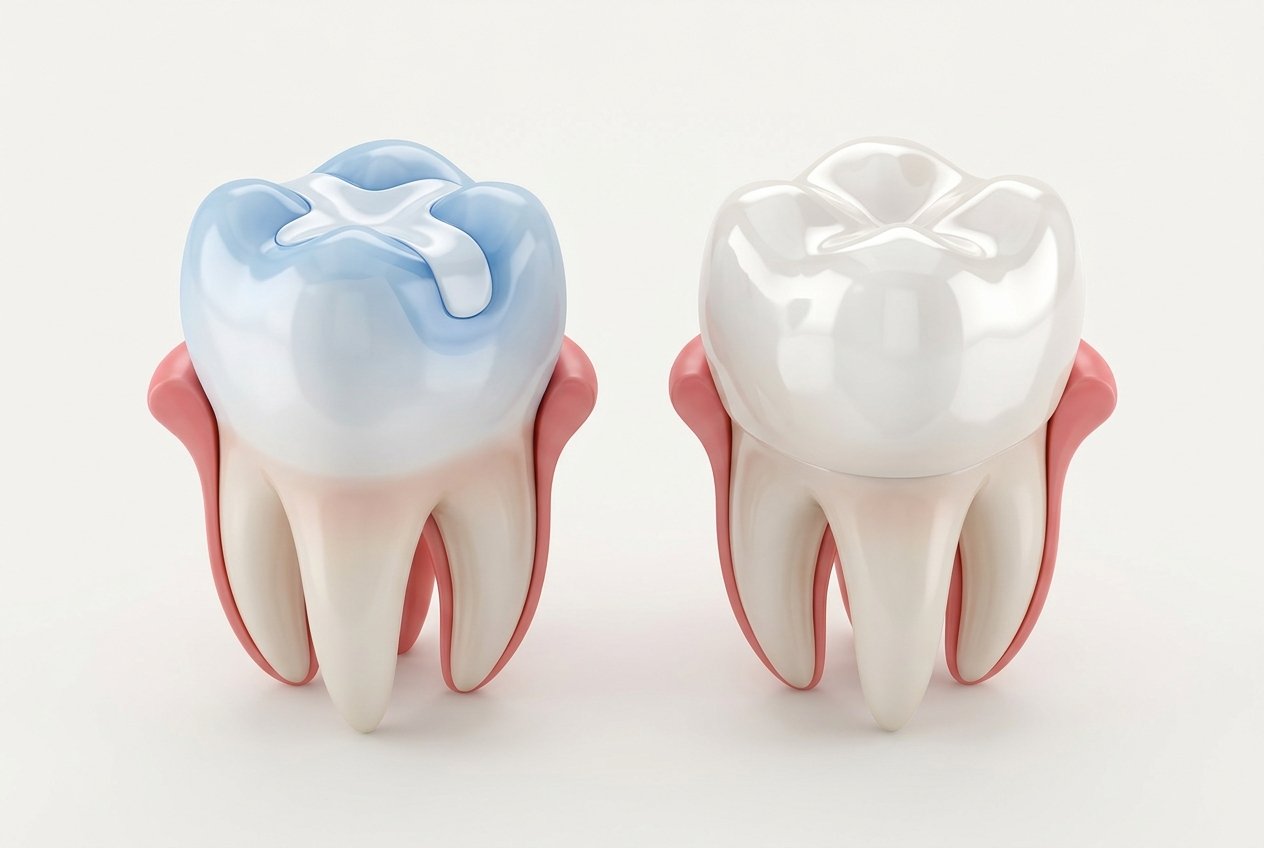
While both treatments restore damaged teeth, they serve different levels of dental issues and require different preparation techniques.
1. Materials and Durability
Both dental crowns and fillings can be crafted from a variety of high-quality materials. Fillings typically use composite resin, porcelain, or glass ionomer. Crowns, on the other hand, are designed for heavy-duty structural support. At Dent of Istanbul, we specialize in high-end zirconium crowns and E-Max porcelain crowns, which offer superior strength and lifelike aesthetics. While a composite filling might last 5 to 7 years, a zirconium crown can easily exceed 15 years of daily function.
2. Tooth Preparation and Conservation
A tooth filling is a highly conservative treatment. The dentist only removes the decayed portion of the tooth, cleans the cavity, and fills it with composite resin. A dental crown requires reshaping the entire visible portion of the tooth (shaving it down) to act as a sturdy anchor for the new custom cap. This is necessary to protect a tooth that is otherwise too weak to support a filling.
When Do You Need a Tooth Filling?
A filling is the ideal solution when the structural integrity of the tooth is mostly intact. We recommend fillings for:
- Minor to moderate tooth decay (cavities).
- Small chips or wear on the enamel.
- Restoring teeth with minimal biting pressure.
When Do You Need a Dental Crown?
A dental crown is necessary when a tooth has suffered extensive damage and cannot support a filling without risking a fracture. We recommend crowns for:
- Severe tooth decay affecting more than 50% of the tooth structure.
- Teeth that have undergone root canal treatment (which makes them brittle).
- Cracked, fractured, or heavily worn teeth.
- Cosmetic smile makeovers where tooth shape and alignment need correction.
Why Choose Dent of Istanbul for Restorative Care?
At Dent of Istanbul, led by renowned experts like Dr. Nilgün Başar, we utilize state-of-the-art CAD/CAM technology in our in-house laboratory. This allows us to design and mill custom zirconium crowns with microscopic precision, ensuring a perfect bite and natural appearance. Many international patients choose our clinic in Istanbul, Turkey, to combine high-end restorative care with a relaxing travel experience, saving up to 70% compared to Western European or US prices.
Frequently Asked Questions (FAQ)
Is a crown better than a filling?
Neither is universally "better"—it depends on the extent of the tooth damage. A filling is ideal for minor decay, preserving maximum natural tooth structure. A crown is better for severely damaged or weak teeth, providing structural support and preventing fractures.
Does getting a dental crown hurt?
The procedure is performed under local anesthesia, meaning you will not feel pain. At Dent of Istanbul, we also offer sedation options for patients experiencing dental anxiety.
How long do zirconium crowns last?
Zirconium crowns are highly durable and can last between 10 to 15 years or longer with proper oral hygiene and regular dental check-ups.