While dental implants look, feel, and function just like natural teeth, and their titanium or zirconia bases are completely immune to decay, they still need proper care. Keeping up with excellent oral hygiene is actually the single most important thing you can do to ensure your implants last a lifetime.
Just like your natural teeth, implants rely on healthy gums and bone to stay secure. When plaque and bacteria build up around them, they can cause inflammation, gum disease, and bone loss, a condition known as peri-implantitis. The good news is that keeping this from happening is pretty straightforward if you have the right routine. In this guide, Dr. Nilgün Başar and our hygiene team at Dent of Istanbul share practical, hands-on advice on how to clean your dental implants so you can keep your new smile healthy for good.
Daily Cleaning Routine for Dental Implants
To keep the tissues around your implants healthy, you should perform a thorough cleaning routine at least twice a day:
1. Brushing
Brush your teeth for at least two minutes, twice a day, with a soft-bristled toothbrush. Hard bristles can scratch the surface of your new crowns and cause your gums to recede, which might expose the metal or zirconia abutment underneath. We highly recommend using an electric or sonic toothbrush; their micro-movements do a fantastic job of breaking up plaque along the gumline.
Use a low-abrasive toothpaste. Avoid whitening toothpastes or formulas containing baking soda, charcoal, or harsh abrasives, as they can wear down the glaze on your porcelain or zirconia crowns over time, making them more susceptible to staining.
2. Flossing
Flossing around implants is a bit different than flossing your natural teeth. The gum tissue attaches to an implant through a delicate circular seal, which isn't quite as tough as the natural ligament holding a real tooth in place. When you floss, use a specialized implant floss (the kind with a stiffened threader end and a thick, spongy middle) or a floss threader. Gently slide it around the implant collar, wrap it in a circle, and slide it just under the gumline. Be careful not to snap the floss down aggressively, as you don't want to tear that delicate gum seal.
3. Using Interdental Brushes
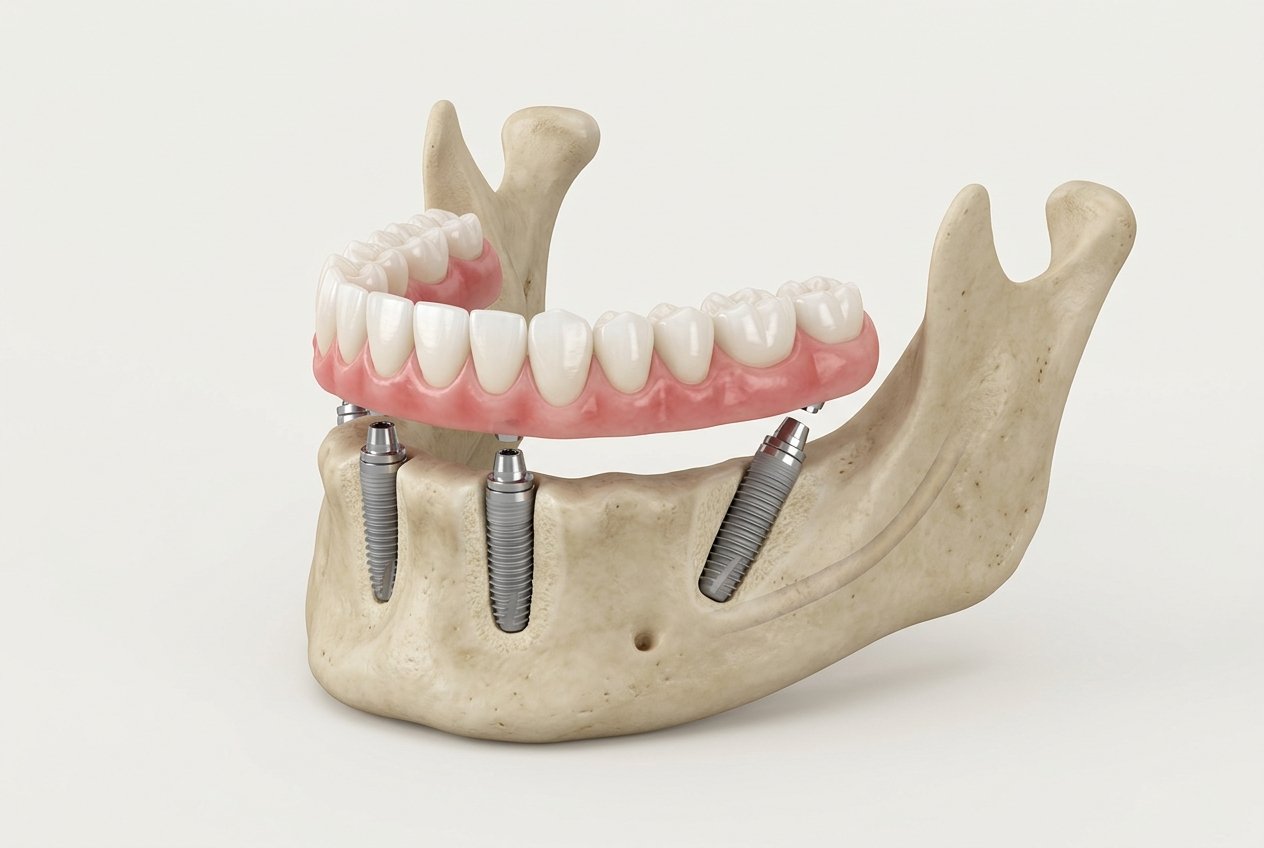
Interdental brushes are small, cone-shaped brushes designed to clean the spaces between your teeth. They are incredibly useful for cleaning the sides of your implants and getting underneath fixed bridges, like All-on-4 restorations. Just make sure to choose ones with plastic-coated wires. Metal wires can scratch the titanium implant post, creating tiny grooves where bacteria love to hide and multiply.
Advanced Tools: The Water Flosser
A water flosser, like a Waterpik, is one of the most effective tools you can use to keep your implants clean. It uses a gentle, pulsating stream of water to flush out plaque, bacteria, and food trapped deep under the gumline and around the implant parts. This is really important for full-mouth restorations like fixed bridges, where normal floss has a hard time reaching. For the best results, keep the setting on low-to-medium and aim the tip at a 90-degree angle to your gums.
Signs of Implant Inflammation to Watch For
Even with excellent home care, you should monitor your implants for any signs of trouble. Contact a dentist immediately if you notice:
- Red, swollen, or tender gums around the implant.
- Bleeding when you brush or floss around the implant site.
- A persistent bad taste in your mouth or chronic bad breath.
- Any feeling of looseness or movement in the implant or crown.
- Pus or discharge coming from the gums surrounding the implant.
The Importance of Professional Checkups
While home care is essential, it's only part of the equation. To keep your new smile in perfect shape, you'll want to schedule professional cleanings and checkups at least twice a year. During these visits, our team at Dent of Istanbul will check on your implants, take digital X-rays to monitor the bone levels, and use specialized carbon-fiber or plastic tools to gently remove any hardened tartar without scratching the implant surfaces.
With a good daily hygiene routine and regular visits to our clinic, your dental implants can easily last a lifetime. If you have any questions about how to care for your implants or need to book your next checkup, feel free to reach out to our patient coordinators today.