For a long time, traditional removable dentures were really the only option if you had lost most or all of your teeth. And while they definitely helped restore a basic smile and some chewing ability, anyone who has actually worn them knows they aren't perfect. It can be incredibly frustrating dealing with sudden slips while you're speaking, or having to pass on your favorite foods because they're too hard to chew.
That’s where modern implant dentistry comes in. By anchoring a denture directly to dental implants, you get the best of both worlds: the full coverage of a denture and the rock-solid stability of implants. If you're trying to figure out the best way to get your smile back, comparing these two options is a great place to start. Here at Dent of Istanbul, Dr. Nilgün Başar and our team specialize in these advanced restorations, helping patients get back teeth that actually look, feel, and function like the real thing.
Understanding Traditional Dentures
Traditional dentures consist of a flesh-colored acrylic base that supports a set of artificial teeth made of porcelain or plastic. An upper denture covers the roof of the mouth (palate), relying on natural suction to stay in place, while a lower denture is shaped like a horseshoe to accommodate the tongue and relies on the surrounding muscles and gravity.
While traditional dentures are straightforward to get and don't require any surgery, they don't replace your tooth roots. When roots are missing, the jawbone gradually shrinks over time because it's no longer being stimulated. As the bone resorbs, the shape of your jaw changes. This is why traditional dentures eventually start slipping, rubbing against your gums, and needing frequent adjustments or messy adhesives just to stay put.
What Are Implant-Supported Dentures?
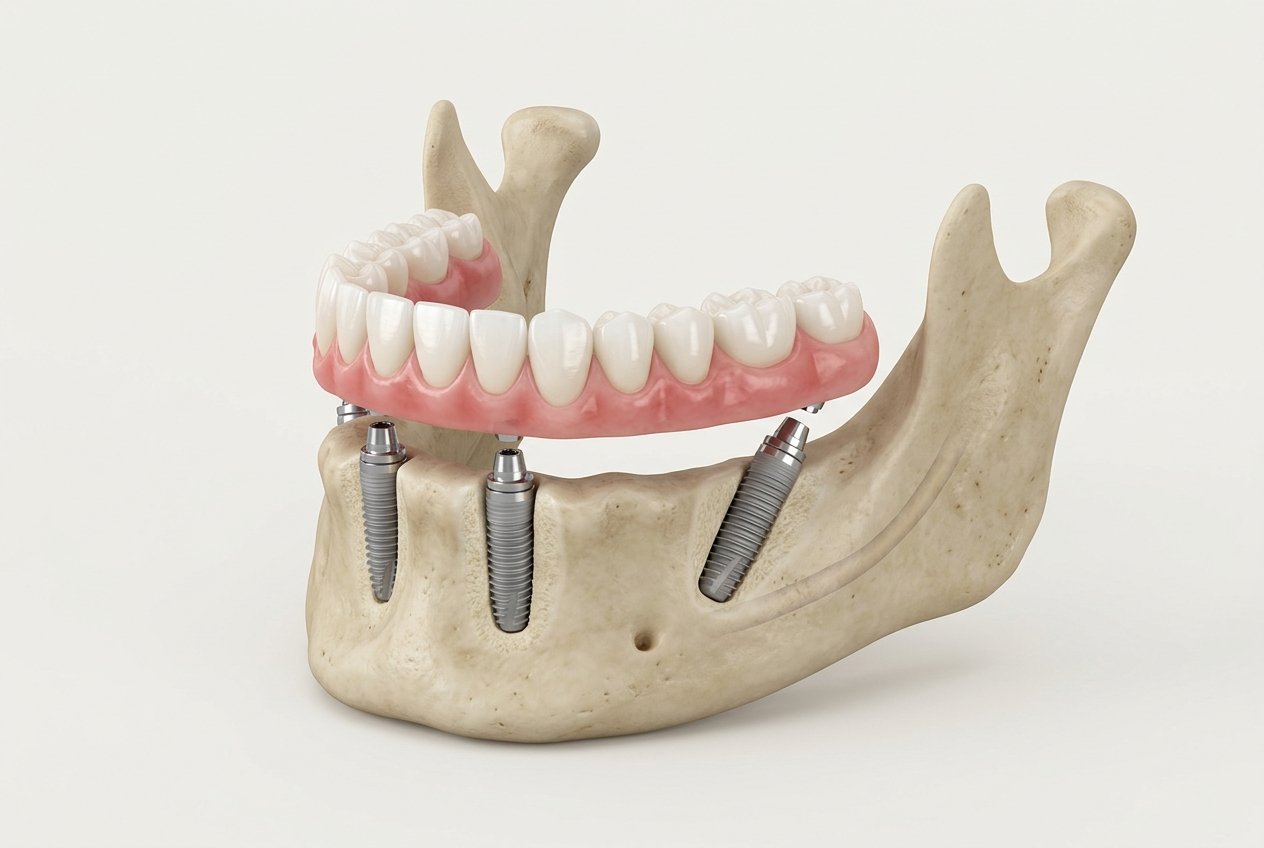
Implant-supported dentures are different because they anchor directly onto titanium posts placed in the jawbone. These posts act like new tooth roots, bonding naturally with your bone over a few months. Once everything is healed, your denture snaps or screws right onto the implants. This keeps them completely stable, so you don't have to worry about them shifting or needing denture glue ever again.
Depending on what you need and what fits your budget, there are two main options:
- Snap-On (Overdentures): These are removable dentures that snap onto locator attachments on the implants. You can remove them at night for cleaning, but they remain securely locked in place during the day.
- Fixed Implant Bridges (All-on-4 or All-on-6): These are permanent restorations screwed onto the implants. Only a dentist can remove them, making them the closest possible match to natural teeth.
Direct Comparison: Traditional vs. Implant-Supported Dentures
To help you decide which option is right for your lifestyle, let’s compare them across several key categories:
1. Stability and Chewing Force
Traditional dentures only give you back about 20% to 30% of your natural chewing power. This makes eating tough or crunchy foods like steak, apples, and nuts really difficult. Implant-supported dentures, on the other hand, bring back about 80% to 90% of your chewing force. Since they're anchored right into the bone, you can eat a normal, healthy diet without worrying about your teeth moving.
2. Comfort and Speech
Since traditional dentures can shift around, they often rub against the gums and cause painful sore spots. They can also make it harder to speak clearly, sometimes causing a slight lisp. On top of that, upper dentures cover the roof of your mouth, which makes it much harder to taste and enjoy your food. Implant-supported dentures don't slip, so those sore spots aren't an issue. Plus, because the roof of your mouth is left open, you can fully taste and enjoy your meals again.
3. Jawbone Preservation and Facial Structure
When you lose teeth, the jawbone underneath starts to shrink. Traditional dentures don't stop this process. In fact, the constant pressure they put on the gums can actually speed up bone loss. As the bone shrinks, it can cause the lower face to look a bit sunken or aged. Dental implants solve this by stimulating the bone, keeping it strong, and preserving your natural facial structure.
4. Longevity and Long-Term Value
Traditional dentures usually need to be adjusted or replaced every 5 to 7 years because your jawbone keeps changing shape. So, while they are cheaper upfront, the cost of adjustments, adhesives, and replacements adds up. Implant-supported dentures require a larger investment at the start, but the implants themselves are built to last a lifetime, making them a much better long-term value.
Why Get Implant-Supported Dentures in Turkey?
For many people, the biggest hurdle to getting implant-supported dentures is the high cost in countries like the UK, Ireland, or the US. By choosing to have your treatment at Dent of Istanbul, you can get the exact same high-end, international implant brands, like Straumann and Nobel Biocare, for a fraction of what you would pay at home.
Dr. Nilgün Başar and our surgical team use advanced 3D imaging and computer-guided planning to place each implant with high precision. To make things as easy as possible for you, we organize your entire stay, including private VIP airport transfers, hotel accommodation, and translation support while you're at the clinic. If you'd like to learn more, feel free to reach out to our team for a free digital consultation. We're here to help you get back a smile you can feel completely confident in.