While traditional dental implants are the most popular way to replace missing teeth, they do require a good amount of healthy bone to anchor into. If you've been missing teeth for a long time, your jawbone naturally shrinks over the years. This can make it difficult to place standard implants without first undergoing a bone graft. If you want to avoid bone grafting, or if you're simply looking for a gentler, faster solution, mini dental implants (MDIs) are a highly effective option.
At Dent of Istanbul, we use mini dental implants to give patients with loose dentures or narrow jawbones their confidence back. Guided by Dr. Nilgün Başar, our team offers gentle, minimally invasive treatments that can stabilize your teeth in just a single visit, helping you eat and speak comfortably again without the need for complex surgeries.
What Are Mini Dental Implants?
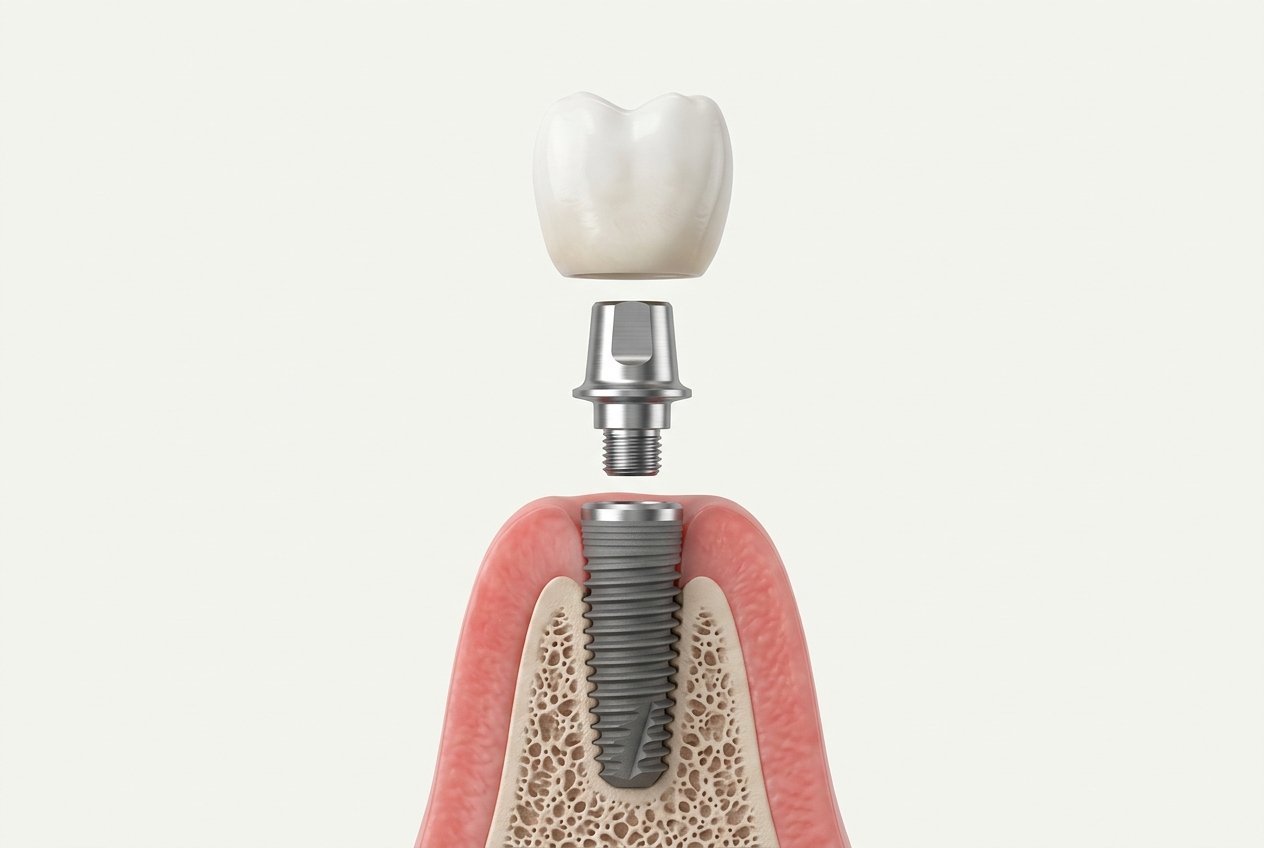
Simply put, mini dental implants are ultra-slim titanium posts. While a standard dental implant is about 3.5mm to 6.0mm wide, a mini implant is much narrower, measuring just 1.8mm to 2.9mm. This slim design means they can fit into very thin ridges of bone where a traditional implant simply wouldn't have enough space.
Another big difference is how they're built. Traditional implants have two pieces (the screw and a separate connector), but mini implants are made as a single, solid piece. The top of the post features a small ball that sits just above your gums. This ball-shaped connector is designed to snap directly into a modified denture, keeping it firmly in place.
Traditional vs. Mini Dental Implants
To help you understand when mini implants are appropriate, here is a direct comparison of the two systems:
| Feature | Traditional Implants | Mini Implants (MDIs) |
|---|---|---|
| Diameter | Wider (3.5mm – 6.0mm) | Narrower (1.8mm – 2.9mm) |
| Design | Two-piece (separate screw & abutment) | One-piece (solid post with ball top) |
| Bone Volume Required | High (requires bone grafting if thin) | Minimal (can fit in narrow ridges) |
| Surgical Technique | Invasive (requires incisions & sutures) | Minimally Invasive (flapless drilling) |
| Primary Use Case | Single crowns, multi-unit bridges | Denture stabilization, narrow spaces |
| Immediate Loading | Rarely (requires 3-6 months healing) | Yes (denture can be snapped on same day) |
How We Use Mini Implants to Secure Loose Dentures
While we can sometimes use a mini implant to replace a single small tooth in a tight spot (like a lower front tooth), their most common and successful use is stabilizing loose dentures.
Many people who wear dentures struggle with a lower plate that slips, wobbles, or pops out when they eat or talk. This happens because the lower jaw has very little natural suction to hold a denture in place. To fix this, we can place four to six mini implants along the lower jaw. We then fit the underside of your denture with special caps containing rubber O-rings. When you put your denture in, it snaps firmly onto the ball-tops of the implants. Your denture stays locked in place all day, letting you enjoy your favorite foods and speak clearly without any worry.
Stabilize Your Dentures in a Single Visit
Tired of loose, slipping dentures? Contact our team on WhatsApp. Send us your panoramic X-ray, and Dr. Nilgün Başar's team will evaluate if mini dental implants are the right solution for you.
The Main Benefits of Mini Implants
Choosing mini dental implants comes with several great advantages, especially for anyone wanting to avoid major surgery:
- No need for bone grafts: Even if you've been told you don't have enough bone for regular implants, mini implants can often be placed without needing bone grafts or sinus lifts.
- A much gentler procedure: We place mini implants using a flapless technique. This means we don't have to cut open the gums or use stitches. We simply place the implant directly through the gum, which means very little bleeding and minimal discomfort.
- Same-day results: Because the procedure is so gentle and the implants fit snugly into the bone, we can often modify your denture and snap it into place on the very same day.
- Rapid recovery: Most patients feel very little soreness afterward and are back to their normal daily routines within a day or two.
How Do They Compare in Durability?
Mini implants are very reliable, though they have a slightly lower long-term success rate than standard implants (usually around 92% to 95%, compared to 97% to 99% for traditional ones). Because they are thinner, they have less surface area to bond with the bone.
Also, since they are a single solid piece, if the ball connector at the top wears down after many years of use, the whole implant usually needs to be replaced. With traditional implants, we can simply swap out the connector (abutment) without touching the implant itself. That said, for stabilizing a denture in a thin jawbone, they are still a fantastic, life-changing solution that offers immediate comfort.
What Do Mini Implants Cost in Turkey?
Since mini implants are smaller and the procedure is much simpler, they are a highly cost-effective alternative to traditional implants. Back in the UK or US, stabilizing a denture with four mini implants can easily cost between €4,000 and €6,000.
At Dent of Istanbul, a single mini implant costs between €200 and €350. A complete package to secure your lower denture, which includes four mini implants, modifying your existing denture, and all surgical fees, ranges from €1,000 to €1,500. This makes it much easier to enjoy a secure, stable smile without breaking the bank.