If you're thinking about getting porcelain veneers, you might be worried about having your teeth shaved down. It's a very common concern. While traditional veneers do need a thin layer of enamel removed so they don't look bulky, there is a much gentler option. Non-prep veneers, often known by brand names like Lumineers, give you a great alternative. These ultra-thin porcelain shells can transform your smile with absolutely no enamel removal, making the process painless, quick, and completely reversible.
At Dent of Istanbul, we specialize in gentle, conservative cosmetic dentistry. Led by Dr. Nilgün Başar, our team uses modern ceramic materials and digital smile design to create custom non-prep and minimal-prep veneers. If you're planning a dental trip to Turkey, understanding how these options compare can help you choose the best path for your smile.
What Are Non-Prep Veneers?
Non-prep veneers are incredibly thin, custom-made porcelain shells. While a traditional veneer is usually about 0.5mm to 0.7mm thick, non-prep veneers are crafted to be as thin as a contact lens (typically between 0.1mm and 0.2mm). Because they are so slim, we can bond them directly to your natural teeth without any drilling, shaving, or reshaping of your enamel.
The Role of Lumineers
Lumineers is a well-known, patented brand of non-prep veneers made from Cerinate porcelain, which is a highly durable glass-ceramic. Since they were the first widely marketed ultra-thin veneers, people often use the name "Lumineers" to mean any non-prep veneer. While we do offer Lumineers, our in-house laboratory also crafts custom non-prep veneers using other advanced porcelain systems. These newer materials provide beautiful translucency and a natural blending effect to match the rest of your teeth.
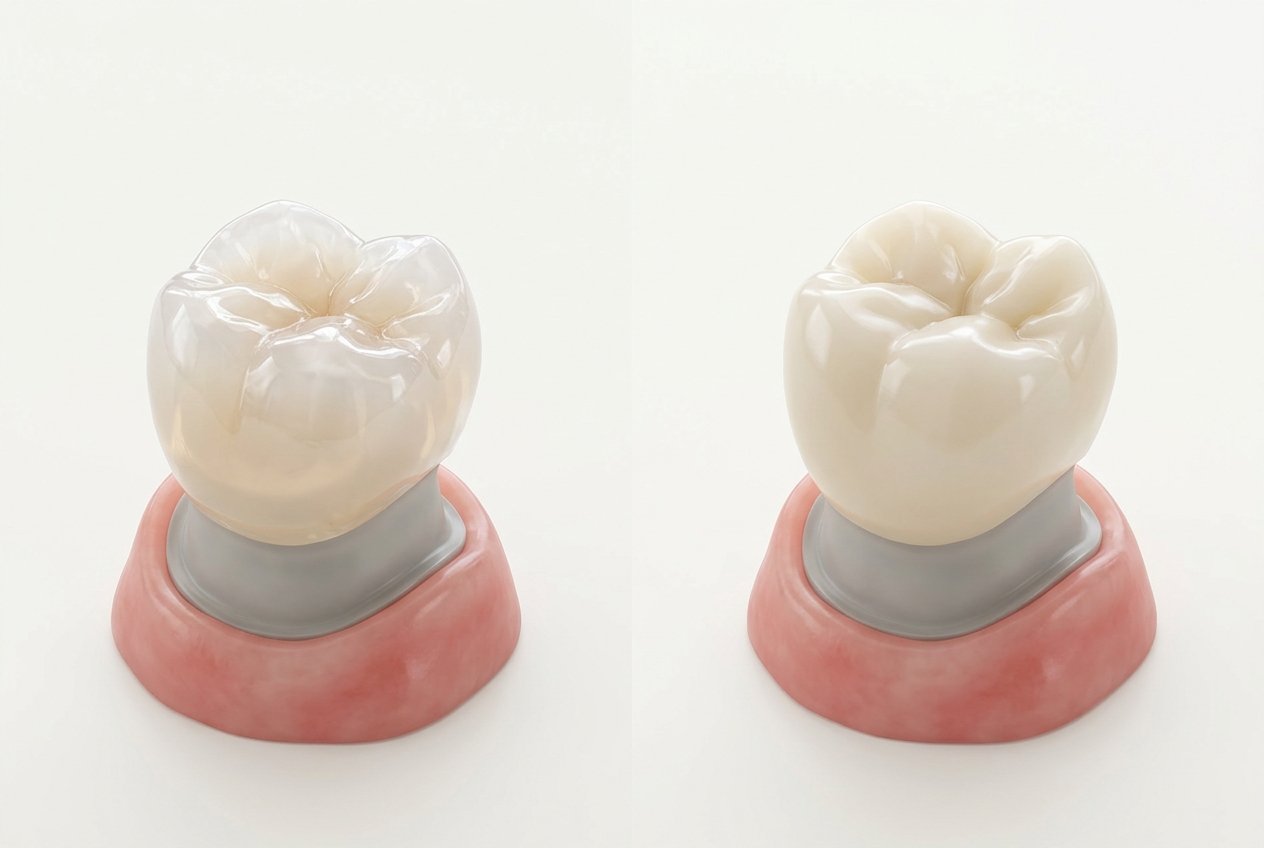
Traditional Veneers vs. Non-Prep Veneers
To help you decide which treatment is right for you, here is a comparison of traditional and non-prep options:
| Feature | Traditional Veneers | Non-Prep Veneers (Lumineers) |
|---|---|---|
| Tooth Preparation | 0.4mm – 0.6mm enamel removal | None (zero enamel removal) |
| Anesthesia Needed | Yes (local anesthetic) | No (painless procedure) |
| Reversibility | Irreversible (teeth always need coverage) | Reversible (can be removed safely) |
| Thickness | 0.5mm – 0.7mm | 0.1mm – 0.2mm |
| Ability to Mask Dark Stains | Excellent (highly effective) | Limited (due to extreme thinness) |
| Ideal for Crowded Teeth | Yes (can correct mild misalignment) | No (will make crowded teeth look bulky) |
Are You a Candidate for Non-Prep Veneers?
Even though the idea of zero drilling sounds great, non-prep veneers aren't right for everyone. Since we aren't removing any enamel, the veneer adds a tiny bit of thickness to the tooth. That means we have to be really selective to make sure your teeth don't end up looking bulky or unnatural.
Ideal Candidates:
- Microdontia (Small Teeth): Patients with naturally small teeth or teeth that sit slightly back in the arch.
- Diastemas (Gaps): Closing small spaces between teeth. Since there is space between the teeth, the veneers can be placed without making the teeth look too wide.
- Worn Teeth: Teeth that have shortened over time due to acid erosion or wear. The veneers restore the lost length and volume.
- Mild Chipping or Cracks: Repairing minor structural imperfections.
Who Should Avoid Non-Prep Veneers?
- Crowded or Prominent Teeth: If a tooth is already rotated or sticks out, placing a non-prep veneer over it will make it stand out even more, resulting in a bulky, unhygienic margin.
- Severely Discolored Teeth: Because non-prep veneers are incredibly thin and translucent, they cannot fully mask dark grey or brown stains (such as those caused by tetracycline or root canal treatments). Traditional veneers or crowns are required to block out these dark shades.
- Poor Bite Alignment: Patients with an underbite, crossbite, or severe bruxism (teeth grinding) may put excessive stress on the thin margins, causing them to chip.
Am I a Candidate for Non-Prep Veneers?
Send us a few clear photos of your smile on WhatsApp. Dr. Nilgün Başar's clinical team will evaluate your teeth and let you know if non-prep veneers are suitable for your bite.
The Minimal-Prep Alternative
If you aren't a perfect candidate for 100% non-prep veneers, you don't have to jump straight to traditional ones. There is a wonderful middle ground called minimal-prep veneers. By removing a tiny sliver of enamel (just 0.2mm to 0.3mm, which is about the thickness of a fingernail), we can create a small ledge for the veneer to sit against. This keeps your teeth from looking bulky at the gumline while keeping the work strictly in the enamel layer. This ensures the bond stays incredibly strong and the process remains very gentle.
What to Expect During Your Treatment in Istanbul
One of the best things about non-prep veneers is how quick and comfortable the treatment is. Since there is no drilling, the process is completely painless and doesn't even require numbing. The process usually takes just two visits:
- First Visit (Digital Impression): We take a 3D digital scan of your teeth. Because no enamel is removed, you do not need to wear temporary veneers while the laboratory fabricates your restorations. You can eat and drink normally.
- Second Visit (Bonding): Your custom-milled veneers are tried in to verify the fit, shade, and alignment. Once approved, the teeth are cleaned, conditioned, and the ultra-thin porcelain is permanently bonded to your enamel using a specialized light-cured resin.
At Dent of Istanbul, we combine advanced digital smile design with high-end German and Swiss ceramic materials to deliver natural, beautiful results. By choosing non-prep or minimal-prep veneers in Turkey, you can achieve a stunning Hollywood smile while preserving the natural health and structure of your teeth.