Introduction: Overcoming Severe Bone Loss
Few phrases in dentistry are as discouraging as: "You are not a candidate for dental implants." Many patients who have worn loose dentures for decades or suffered from advanced periodontal disease are told they lack the necessary bone structure to support traditional implants. They are often advised to undergo extensive, painful bone grafting and sinus lifts—a process that can require multiple surgeries and up to a year of healing before implants can even be placed.
However, bone loss does not have to mean settling for loose dentures. Zygomatic implants offer a specialized, graftless alternative for restoring a full-arch smile. By anchoring directly into the dense, stable cheekbone (zygoma) rather than the jawbone, these implants bypass areas of bone loss entirely. This allows patients with severe maxillary atrophy to receive a permanent, non-removable set of teeth in a single clinical visit.
At Dent of Istanbul, we specialize in complex implantology. Our clinical team focuses on providing safe, advanced solutions for patients who have been turned away elsewhere, helping them regain oral function and confidence without the need for extensive bone grafting.
The "No Bone" Dilemma: Why Standard Implants Fail in Atrophic Jaws
To understand why zygomatic implants are necessary, it helps to look at how the jawbone changes after tooth loss. When teeth are missing, the surrounding alveolar bone no longer receives the mechanical stimulation of chewing. Over time, the body naturally resorbs this bone, causing the jaw to shrink. Additionally, the maxillary sinuses (air-filled cavities above your upper teeth) tend to expand downward as bone is lost, a process known as sinus pneumatization.
Traditional dental implants require a minimum height and width of healthy bone (typically at least 10mm) to achieve stability. If implants are placed in thin, resorbed bone, they cannot integrate properly and are highly likely to fail. While bone grafting and sinus lifts can rebuild this structure, they require significant healing times and may not always be feasible for patients with severe, widespread bone loss.
What are Zygomatic Implants? Bypassing the Maxilla
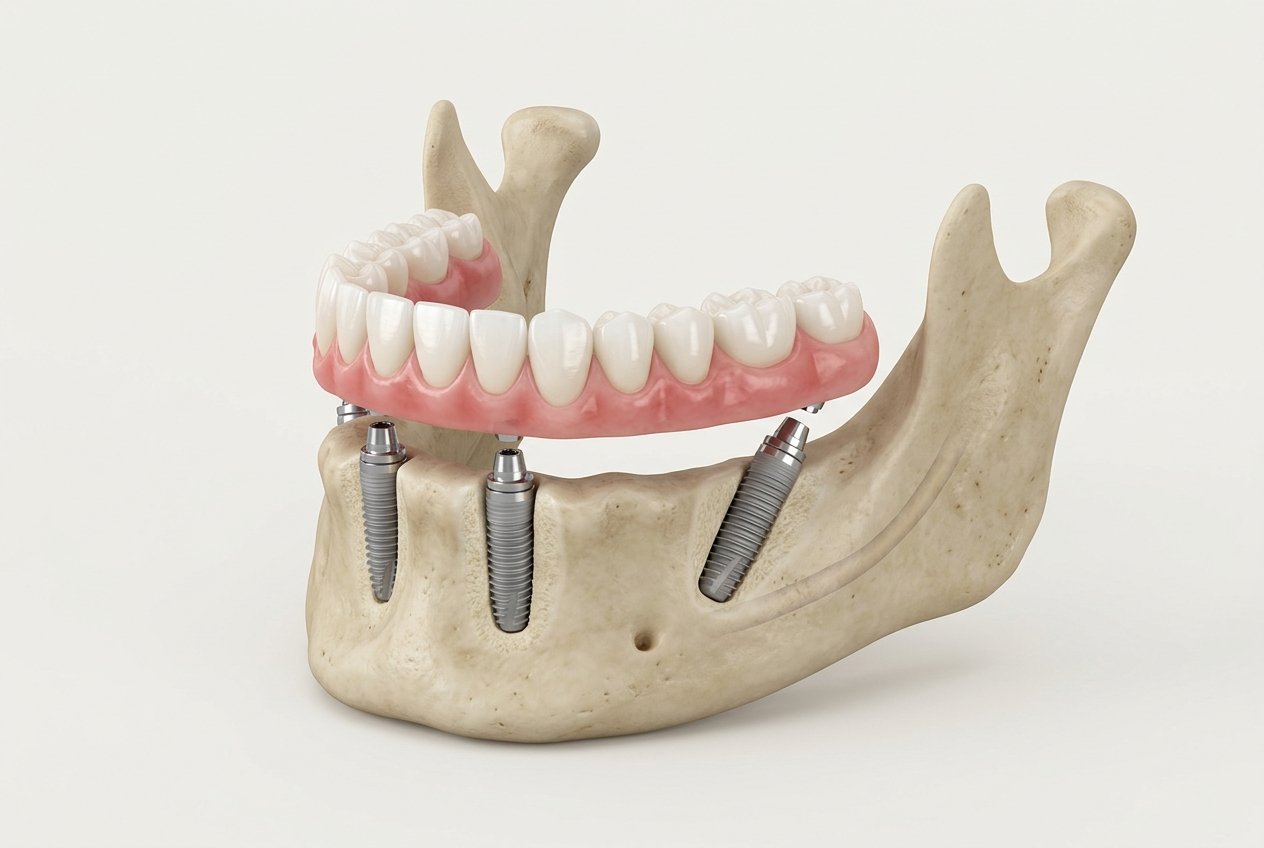
Zygomatic implants are an advanced engineering solution to the problem of bone loss. While traditional implants are typically 10mm to 15mm long, zygomatic implants are significantly longer, ranging from 30mm to 55mm.
The Anatomy: How Cheekbone Anchorage Works
Instead of anchoring in the upper jawbone (maxilla), zygomatic implants are placed at a 45-degree angle, bypassing the thin maxillary bone to anchor securely into the zygomatic bone (cheekbone). Unlike the jawbone, the cheekbone is composed of dense, cortical bone that does not resorb or lose volume, even after decades of tooth loss. This dense bone structure provides exceptional primary stability, making it the ideal foundation for supporting a full-arch dental bridge.
Zygomatic Implants vs. Bone Grafting: Comparing Your Options
Patients facing severe bone loss generally choose between two distinct treatment paths. Comparing the timelines and surgical requirements of each option can help you determine the best approach for your needs.
The Bone Grafting Journey: Multiple Surgeries over 9 Months
Rebuilding a severely resorbed jaw typically involves a multi-stage process:
- Sinus Lifts & Bone Grafts: Surgical placement of bone graft material to lift the sinus floor and rebuild bone height.
- Healing Period: A 6-month wait to allow the graft material to integrate and form solid bone.
- Implant Placement: Placing traditional implants into the newly formed bone.
- Second Healing Period: A 3-month wait for the implants to fuse with the bone (osseointegration).
- Final Restoration: Fitting the permanent crowns or bridge.
This process requires multiple surgical visits, significant healing time, and can be physically demanding.
The Zygomatic Alternative: Immediate Function in 3 Days
Zygomatic implants simplify this timeline by utilizing the "Immediate Loading" protocol. Because the cheekbone is exceptionally dense, our surgeons can achieve high insertion torque during placement. This stability allows us to attach a temporary, fixed cosmetic bridge within 72 hours of surgery. The patient leaves the clinic with functional, non-removable teeth, allowing them to eat and speak comfortably while the implants heal over the next few months.
Do you have a 3D CT scan? Send your diagnostic files to our surgical team on WhatsApp. Dr. Nilgün Başar will personally review your case and confirm your candidacy—completely free of charge.
The Surgical Protocol at Dent of Istanbul: How We Ensure Safety
Zygomatic implant placement is a highly advanced surgical procedure that requires specialized training, precise planning, and dedicated clinical infrastructure.
3D Digital Guided Surgery: Mapping the Midface Anatomy
To ensure precision, we perform a comprehensive 3D Cone Beam Computed Tomography (CBCT) scan. Our Chief of Staff, Dr. Nilgün Başar, uses this digital model of your skull to map your midface anatomy. We plan the exact angle and depth of each implant to ensure they anchor securely in the cheekbone while avoiding the maxillary sinuses and facial nerves. During surgery, we utilize custom-printed surgical guides to execute this plan with high accuracy.
Comfort and Safety: Sedation and Sterile Operating Theaters
Because zygomatic surgery is a complex procedure, we perform it under deep intravenous (IV) sedation or general anesthesia in our hospital-grade, sterile operating theaters. A certified anesthesiologist monitors your vital signs throughout the procedure, ensuring you remain comfortable and feel no pain. We use high-end, clinically proven implant systems, primarily Nobel Biocare®, which are designed specifically for zygomatic applications.
Zygomatic Implants Cost in Turkey: high-quality care at a Fraction of the Cost
The cost of zygomatic implant treatment in the US or UK is often a significant barrier, frequently ranging from $25,000 to $40,000 per arch due to the specialized nature of the surgery.
At Dent of Istanbul, our all-inclusive zygomatic packages range from $7,000 to $12,000 per arch. This price includes the surgical fees, high-end Nobel Biocare implants, 3D CBCT scans, IV sedation, temporary teeth, and your stay at a partner 5-star hotel with private VIP transfers. The lower cost is driven by local macroeconomic factors, allowing us to maintain the highest clinical standards while keeping the treatment accessible.
Zygomatic Implant Treatment Comparison
| Feature | Traditional Bone Grafting Path | Zygomatic Implant Path |
|---|---|---|
| Total Treatment Time | 9 to 12 Months | 3 Days (for temporary teeth) |
| Number of Surgeries | 2 to 3 separate procedures | 1 single procedure |
| Bone Grafting Required | Yes (often extensive) | No (completely graftless) |
| Temporary Teeth | Removable dentures during healing | Fixed, non-removable bridge within 72 hours |
Life After Surgery: Recovery, Diet, and Long-Term Success
Following your surgery, you can expect a straightforward recovery. Mild swelling and bruising around the cheeks are normal for the first 3 to 5 days and are managed with prescribed anti-inflammatory medications and cold compresses.
To allow the implants to integrate with the cheekbone, you will follow a soft food diet (such as pasta, fish, and soft vegetables) for the first 12 weeks. After 4 to 6 months, you will return to our clinic for a short visit to replace the temporary bridge with your custom-milled, metal-reinforced zirconia permanent teeth, designed in our in-house laboratory for a comfortable, natural bite.
Conclusion: Reclaiming Your Quality of Life
Severe bone loss does not have to prevent you from enjoying a permanent, confident smile. By choosing a specialist-led clinic equipped with advanced 3D planning and dedicated surgical facilities, you can bypass the delays of bone grafting and restore oral function in a single visit.
If you have been told you are not a candidate for implants, we invite you to contact us. Upload your dental photos or a copy of your 3D CT scan, and Dr. Nilgün Başar's team will provide a personalized evaluation and transparent treatment plan.