3D printing, also known as additive manufacturing, has completely changed the world of dental treatments in ways that seemed impossible just a decade ago. This technology creates three-dimensional objects by building them layer by layer from digital designs, resulting in precise dental solutions that perfectly match each patient’s unique anatomy.
When you go to the dentist today, there’s a good chance that 3D printing dentistry is involved in your treatment plan. This technology has moved from experimental labs into everyday dental practice, offering custom crowns and bridges, surgical guides, and orthodontic aligners. This shift represents one of the most significant advancements in oral healthcare history.
How 3D Printing is Changing Dentistry
The impact of 3D printing on modern dental treatments goes beyond simply making things. It is transforming how dentists:
- Diagnose conditions
- Plan procedures
- Communicate with patients
In the past, traditional methods required weeks of waiting and multiple appointments for these processes. However, with the introduction of additive manufacturing dental techniques, customized solutions can now be delivered in hours or days.
The Importance of 3D Printing in Dental Care
Technological advancements like 3D printing are not just convenient—they are crucial for meeting the increasing demand for personalized, precise, and efficient dental care. Here’s why:
- Patients expect treatments that fit perfectly, look natural, and minimize discomfort.
- Dentists require tools that enhance accuracy while lowering costs and turnaround times.
3D printing meets both of these needs simultaneously, making it a fundamental part of modern dental practice.
Understanding 3D Printing Technology in Dentistry
Dental practices rely on several distinct 3D printing technologies, each offering unique capabilities for different clinical applications. The choice of technology depends on factors like required precision, material properties, production speed, and the specific dental device being manufactured.
1. Stereolithography (SLA)
Stereolithography (SLA) uses a UV laser to cure liquid photopolymer resin layer by layer, producing exceptionally smooth surfaces and fine details. You’ll find this technology ideal for creating surgical guides, clear aligners, and diagnostic models where precision matters most. The high resolution makes SLA particularly valuable for applications requiring tight tolerances.
2. Digital light processing (DLP)
Digital light processing (DLP) operates similarly to SLA but projects an entire layer at once using a digital light projector, significantly reducing print times. This speed advantage makes DLP perfect for high-volume production of dental models and temporary restorations without sacrificing accuracy.
3. Selective laser sintering (SLS)
Selective laser sintering (SLS) employs a laser to fuse powdered materials—typically polymers or metals—creating durable parts without support structures. You can use this technology for producing metal frameworks for crowns and bridges, as well as removable partial denture frameworks that require exceptional strength.
4. Fused deposition modeling (FDM)
Fused deposition modeling (FDM) extrudes thermoplastic filaments through a heated nozzle, building objects layer by layer. While offering lower resolution than other methods, FDM provides cost-effective solutions for creating study models, surgical planning tools, and prototype designs where extreme precision isn’t critical.
Applications of 3D Printing in Modern Dental Treatments
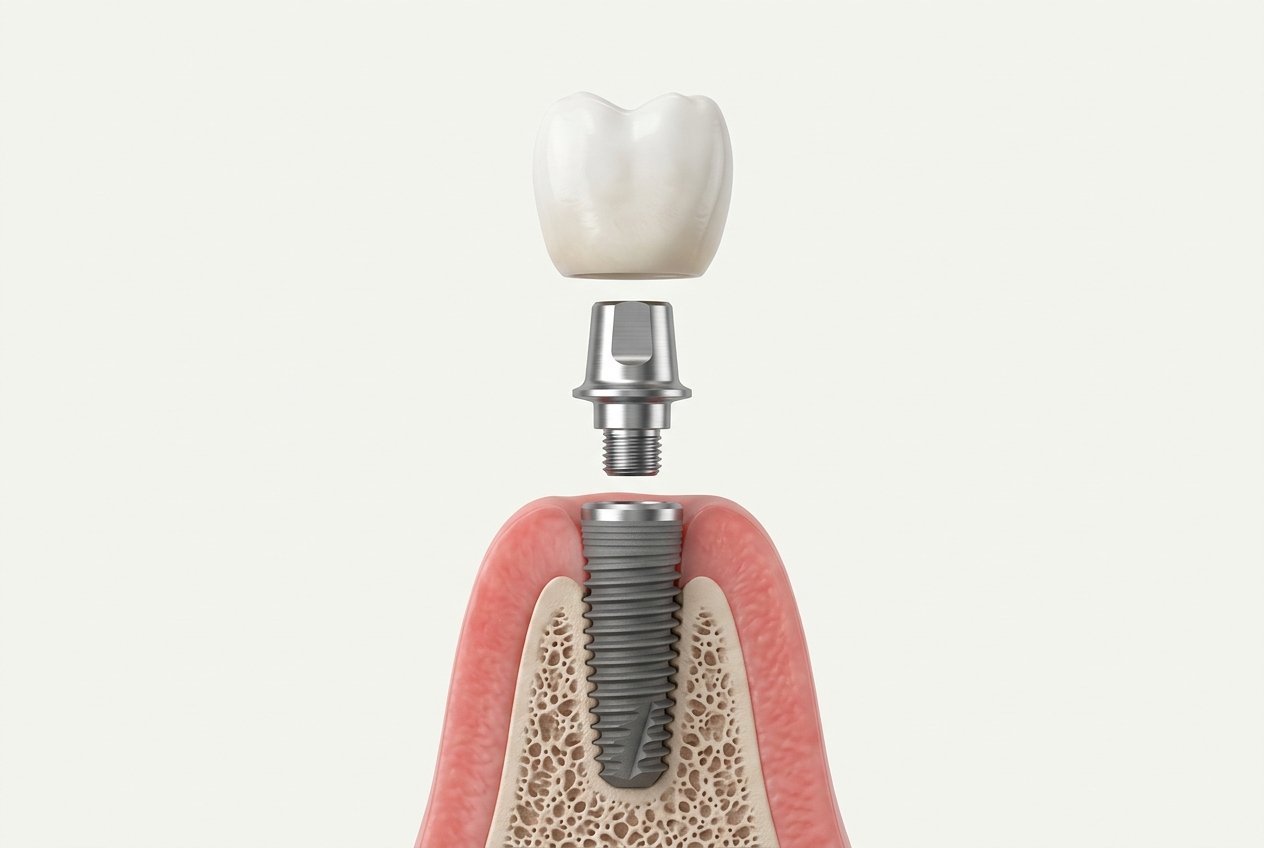
Dental prosthetics 3D printing has transformed how dental laboratories and practices create restorations. You can now receive custom crowns and bridges that perfectly match your tooth anatomy within days rather than weeks. The digital workflow starts with an intraoral scan, which feeds directly into design software before being sent to a 3D printer. This process eliminates multiple fitting appointments and reduces the margin of error that traditional impression methods often introduce.
Surgical guides represent another critical application where precision matters most. When you need dental implants, your dentist can use 3D printed guides that map the exact angle, depth, and position for implant placement based on your CBCT scan data. These guides snap onto your existing teeth or gums, providing a physical template that ensures the implant goes exactly where planned—reducing surgical time and improving success rates.
Orthodontic aligners have become increasingly accessible through 3D printing technology. Your orthodontist can design a complete series of aligners customized to your treatment plan, with each tray printed to move your teeth incrementally. Retainers, bite splints, and other orthodontic appliances follow the same digital-to-physical workflow.
Diagnostic tools benefit from this technology too. Your dentist can print anatomical models of your jaw, showing complex anatomical relationships that help plan treatments. Custom impression trays ensure accurate captures of your oral structures, while study models allow your dental team to analyze your case from every angle before beginning treatment.
Advantages of 3D Printing in Dentistry
1. Precision Dental Appliances
Precision dental appliances represent one of the most significant advantages of additive manufacturing in dental care. The digital workflow eliminates human error inherent in traditional impression-taking and manual fabrication processes. You get restorations that fit with microscopic accuracy, reducing the need for chair-side adjustments and remakes. This enhanced precision translates directly to improved patient comfort—no more ill-fitting crowns that require multiple appointments to perfect.
2. Faster Treatment Times
Faster treatment times dramatically change the patient experience. Traditional methods often require weeks of waiting while external labs manufacture prosthetics. With in-office 3D printing capabilities, you can receive same-day crowns or surgical guides. The technology compresses what used to be a multi-week process into hours, reducing the number of appointments needed and minimizing the time you spend in the dental chair.
3. Cost Efficiency
Cost efficiency dentistry becomes achievable through streamlined workflows and reduced material waste. Traditional subtractive manufacturing methods carve restorations from solid blocks, discarding up to 90% of the material. 3D printing builds layer by layer, using only what’s necessary. Labs save on material costs, shipping expenses, and labor hours—savings that can be passed to you.
4. Patient-Specific Customization
Patient-specific customization reaches new heights with digital scanning and 3D printing. Each restoration matches your unique oral anatomy with precision impossible to achieve through manual methods. The technology accounts for individual bite patterns, tooth positioning, and aesthetic preferences, creating truly personalized dental solutions.
For more insights into how 3D printing is revolutionizing dentistry, visit Dentof Istanbul’s website which provides a wealth of information on this topic.
Materials Used in 3D Printed Dental Solutions
The success of 3D printed dental devices depends heavily on material selection. Biocompatible resins dentistry professionals rely on include methacrylate-based and epoxy-based formulations specifically designed for intraoral use. These resins undergo rigorous testing to ensure they meet FDA and ISO standards for biocompatibility, making them safe for direct contact with oral tissues. You’ll find them commonly used in temporary crowns, surgical guides, and orthodontic appliances.
High-strength ceramics dental materials have transformed the durability of permanent restorations. Zirconia stands out as the most popular ceramic choice, offering exceptional strength—up to 1,200 MPa—while maintaining a natural tooth-like appearance. Lithium disilicate represents another ceramic option that balances aesthetics with mechanical properties, particularly for anterior restorations where translucency matters.
When it comes to PEEK polymer dental applications, this material has gained significant traction for its unique combination of properties. PEEK exhibits bone-like elasticity, reducing stress on surrounding structures while providing excellent chemical resistance. You’ll see it used for implant abutments, temporary bridges, and frameworks for removable prosthetics. Polycarbonate offers similar benefits at a lower cost point, making it ideal for temporary devices and orthodontic models.
Material selection hinges on specific application requirements:
- Strength demands dictate whether ceramics or polymers suit the restoration
- Aesthetic requirements determine resin translucency and shade matching capabilities
- Wear resistance influences material choice for occlusal surfaces
- Thermal properties affect comfort during fabrication and patient use
The Role of 3D Printed Models in Diagnosis and Treatment Planning
3D printed models have changed the way dental professionals handle complex cases. Whether it’s a full-mouth reconstruction or a difficult extraction, having a physical model makes a big difference. These models are made from patient-specific scans and allow dentists to see the exact anatomy from all angles, something that’s hard to do with just digital images.
1. Improving Surgical Planning with 3D Printed Models
Surgical planning has become even better with the use of 3D printed models. Dentists can now practice the entire procedure on the model before actually performing it on the patient. This practice run helps identify any potential problems, figure out the best angles for implants, and make any necessary adjustments to tools or plates beforehand. As a result, surgeries take less time, there are fewer surprises during the procedure, and overall outcomes are improved. In fact, I’ve witnessed cases where practicing on 3D printed models reduced surgery time by almost 40%.
2. Enhancing Patient Communication through Physical Representation
Explaining treatment plans to patients has also become much easier with physical models. Instead of trying to convey information using a screen, dentists can now give their patients an exact replica of their jaw. This hands-on approach allows patients to see any misalignments, understand why certain teeth need to be removed, or visualize how implants will be placed. By using tangible representations like these, trust is built between dentists and patients, leading to more informed decisions about treatment options. The improvement in patient understanding and acceptance rates is significant when they can physically interact with their own dental anatomy.
Future Trends and Innovations in Dental 3D Printing
The field of dental 3D printing is constantly evolving, with new technologies transforming patient care. Here are some key trends and innovations to watch out for:
1. Multi-Material 3D Printing
Multi-material 3D printing is an exciting development in dentistry, allowing printers to combine different materials in a single build. This technology enables the creation of dental restorations that closely resemble natural teeth, both in appearance and function. By layering materials with varying translucency, color, and hardness, these printers can produce restorations that are nearly identical to real tooth structures.
2. Antimicrobial Dental Materials
Researchers are actively working on developing antimicrobial dental materials that incorporate antibacterial agents such as silver nanoparticles and quaternary ammonium compounds into printable resins. These materials have the potential to prevent bacterial colonization on dental appliances, reducing the risk of infections like peri-implantitis. This innovation could greatly benefit surgical guides, temporary crowns, and orthodontic devices that come into contact with oral tissues.
3. Biomimetic Dental Materials
Another area of focus is the development of biomimetic dental materials that not only resemble natural teeth but also possess similar mechanical properties. Scientists are exploring ways to create printable composites that replicate the unique characteristics of enamel and dentin, allowing restorations to respond to stress and wear in a manner akin to biological tissues. This advancement holds promise for enhancing the durability and integration of dental restorations.
Environmental Impact and Sustainability Considerations
The shift toward sustainable dentistry technologies brings significant ecological advantages that extend beyond clinical benefits. Traditional dental manufacturing relies heavily on subtractive methods—milling blocks of material and discarding excess. You’re essentially creating waste with every crown or bridge produced through conventional techniques. A single milled restoration can waste up to 90% of the original material block.
3D printing flips this equation entirely. Additive manufacturing builds dental prosthetics layer by layer, using only the material necessary for the final product. This approach to material waste reduction 3D printing delivers measurable environmental benefits:
- Resin-based prints consume minimal excess material, with support structures representing the only waste
- Powder-based systems allow unused material to be recycled for subsequent prints
- Digital workflows eliminate the need for physical impressions, reducing silicone waste and shipping emissions
Dental laboratories adopting 3D printing report waste reductions of 70-80% compared to traditional milling operations. The precision of digital fabrication means you’re not overproducing or discarding failed attempts due to human error. Each print follows exact specifications derived from patient scans, reducing remake rates and associated material consumption.
The energy footprint deserves attention too. Desktop 3D printers used in dental applications consume considerably less power than industrial milling machines, contributing to lower operational costs and reduced carbon emissions within dental practices.
Conclusion
The Role of 3D Printing in Modern Dental Treatments has fundamentally reshaped how you receive dental care. This personalized dental care technology delivers treatment solutions precisely matched to your unique anatomy, eliminating the one-size-fits-all approach that dominated traditional dentistry.
You benefit from this transformation through:
- Faster treatment timelines – what once took weeks now happens in days
- Superior fit and comfort – devices designed specifically for your mouth structure
- Predictable results – digital planning removes guesswork from complex procedures
- Enhanced communication – physical models help you understand your treatment plan
The impact on clinical outcomes dentistry innovation extends beyond patient satisfaction. Your dentist now operates with unprecedented precision, reducing chair time while improving restoration longevity. Dental practices streamline their workflows, cutting costs without compromising quality.
As materials advance and printers become more sophisticated, you’ll see even more applications emerge. The technology continues evolving, but its core promise remains constant: dental care tailored exactly to you, delivered efficiently and effectively.